
In 2025, the National Institutes of Health (NIH) awarded an $8.4 million grant to fund the first-ever spastic paraplegia research consortium. The Spastic Paraplegia Centers of Excellence Research Network (SP-CERN) is building the foundation for transformative progress in hereditary spastic paraplegia (HSP), a large group of around 80 inherited disorders that affect nerves that send messages to the muscles. Here, the SP-CERN team shares the story behind the consortium, research goals, and future plans.
Can you tell us a little about the diseases you study?
SP-CERN focuses on hereditary spastic paraplegia (HSP)—a group of rare, inherited neurological disorders that cause the progressive degeneration of upper motor neurons in the brain and spinal cord. The hallmark symptoms are muscle stiffness (spasticity), weakness, and increasing difficulty walking.
HSP comes in two broad forms: "pure" HSP, where symptoms are mostly limited to the lower limbs, and "complex" HSP, where individuals may also experience cognitive differences, seizures, vision or hearing problems, and other neurological challenges. HSP can affect people of any age and is caused by variants in many different genes. Fewer than 50,000 people in the United States are affected.
Within the HSP umbrella, we study specific subtypes including SPG3A, SPG4 (the most common form, accounting for roughly 40–50% of all HSP cases), and several complex childhood-onset forms such as the AP-4–associated HSPs (SPG47, SPG50, SPG51, SPG52), SPG49, SPG5A, SPG56, SPG83, and GPT2 deficiency. Each subtype has its own genetic cause, age of onset, and clinical profile—which is part of what makes this research both challenging and exciting.
What are some of the challenges for research in HSP?
HSP presents several unique research hurdles.
First, it is a rare disease—which means smaller patient populations, fewer specialized research centers, and historically limited funding. With so many genetic subtypes, what we learn about one form doesn't always apply to another, making it difficult to develop "one-size-fits-all" therapies or outcome measures.
We also lack well-validated biomarkers and standardized tools to measure disease progression—critical ingredients for running meaningful clinical trials. Many patients go undiagnosed or misdiagnosed for years because HSP is not widely recognized, and access to specialized care is limited.
Finally, for the most severe childhood-onset forms, affected individuals often cannot participate in traditional research assessments, requiring us to develop entirely new approaches.
Addressing all of these challenges at once is exactly why a coordinated, multi-site consortium like SP-CERN is so necessary.
How did your team come together to form SP-CERN?
SP-CERN was built on the recognition that no single center could tackle HSP alone. As the first spastic paraplegia research consortium in the United States, SP-CERN brings together physician-scientists and their multidisciplinary teams from clinical and research centers across North America. These are investigators who had been working on HSP in parallel—often in isolation—and who saw the opportunity to multiply their impact by pooling expertise, patients, and resources.
The network is funded by NIH through the Rare Diseases Clinical Research Network (RDCRN), in collaboration with the National Center for Advancing Translational Sciences (NCATS), Eunice Kennedy Shriver National Institute of Child Health and Human Development (NICHD), National Human Genome Research Institute (NHGRI), and National Institute of Neurological Disorders and Stroke (NINDS), and is administratively coordinated through Boston Children's Hospital.
What are your overall goals?
Our overarching goal is to create clinical trial readiness for HSP—meaning we want to lay all the groundwork needed so that when a promising therapy is ready to be tested, we can move quickly and efficiently. That means building the infrastructure (registries, biobanks, genomic databases), developing the tools (outcome measures, biomarkers, digital endpoints), training the next generation of HSP clinician-scientists, and fostering collaboration—both within the US and internationally.
More broadly, we are committed to improving the quality of care and expanding access to high-quality healthcare for every person affected by HSP.
What are the main research questions you are aiming to answer?
SP-CERN is pursuing three major research tracks. The first is a Clinical Trial Readiness Platform—we are conducting comprehensive natural history studies across the full age spectrum, defining what meaningful improvement looks like from both a clinical and a patient perspective, and identifying biomarkers (such as neurofilament light chain) that can serve as measurable signals of disease activity.
The second is Genomic Resources and Studies—we are using cutting-edge technologies like long-read sequencing and multi-omics approaches to solve unsolved HSP cases, refine our understanding of how genetic variants cause disease, and lay the groundwork for precision therapies.
The third is Digital Surrogates for Disease Progression—we are developing wearable sensor technologies and AI-based tools to capture gait and daily activity in the real world, which can serve as novel endpoints in clinical trials and give us a much richer picture of how patients are actually doing day to day.
How will you collaborate with patients, family members, and advocates?
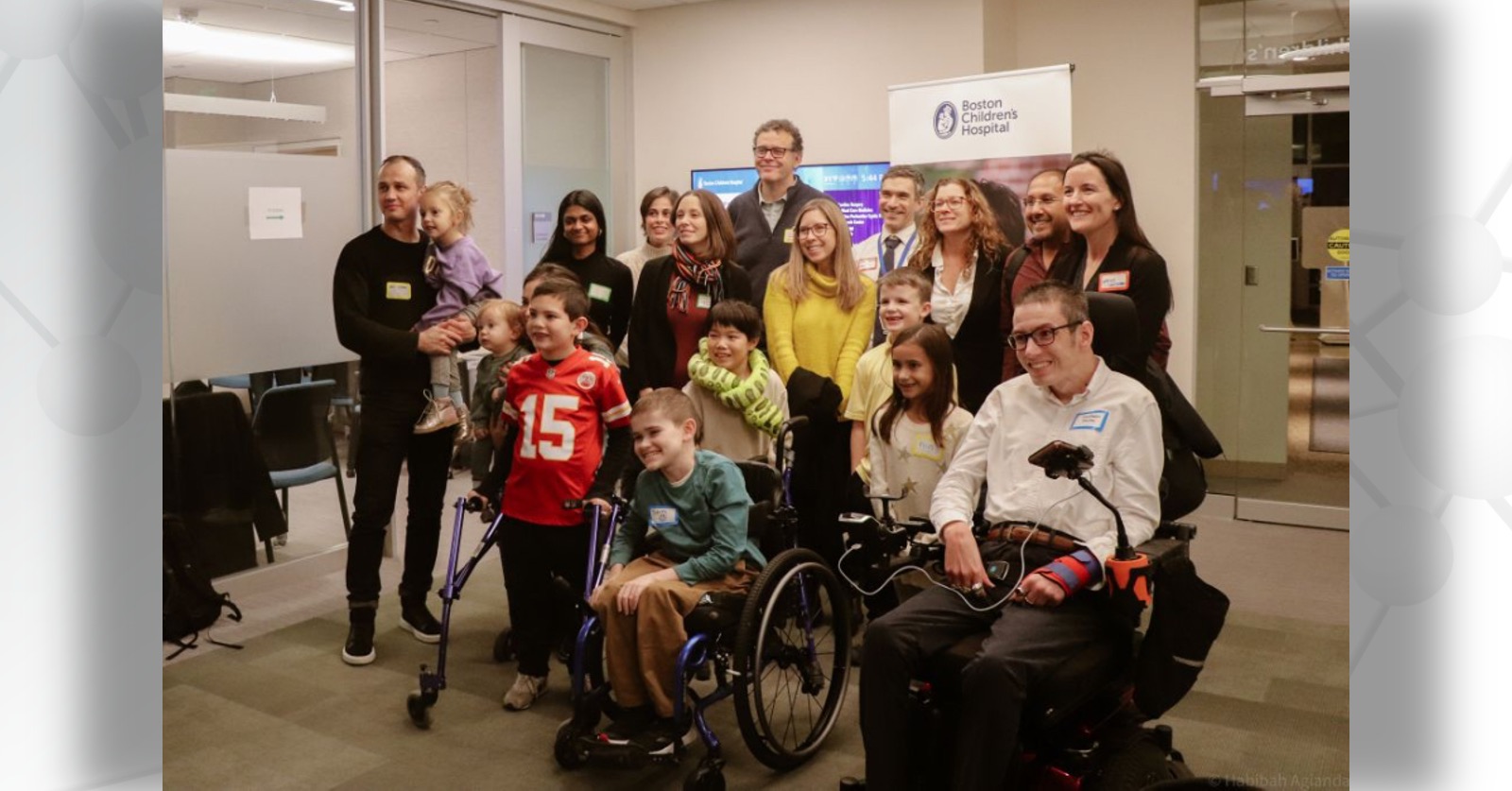
Patient and family engagement is central to everything we do. SP-CERN works closely with a remarkable group of patient advocacy organizations—including the Spastic Paraplegia Foundation, CureSPG4, Cure AP-4 Foundation, CureSPG50, the Carter Foundation for Neurologic Research (Kids with SPG3A), the Lilly and Blair Foundation, the Maurya Koduri Foundation, the Maddi Foundation, the Warburg Micro Research Foundation, and Genetic Cures for Kids. Many of these organizations were founded by families who were told there was no research being done on their condition—and who decided to change that themselves.
These partnerships go far beyond awareness. Advocacy groups help us recruit participants, ensure our research questions reflect what truly matters to patients, and amplify our reach into communities where HSP may be underdiagnosed. SP-CERN is also committed to building a collaborative network that harmonizes research internationally, so families anywhere in the world can benefit from and contribute to our work.
What excites you most about the future of HSP research?
We are at a genuinely pivotal moment. The tools now available to us—gene therapies, long-read genomic sequencing, AI-powered digital biomarkers, wearable sensors—were not on the table even a decade ago.
For HSP specifically, having the infrastructure SP-CERN is building means that when a therapy is ready to test, we won't be starting from scratch. We'll have the natural history data, the outcome measures, the biospecimen samples, and the patient community already in place.
The passion we see from patient advocacy groups—many of which have already funded early research, organized scientific symposia, and contributed to gene therapy programs—is extraordinary. That energy, combined with the science, makes us genuinely optimistic that we can make a real difference for people living with HSP.
The Spastic Paraplegia Centers of Excellence Research Network (SP-CERN) is part of the Rare Diseases Clinical Research Network (RDCRN), which is funded by the National Institutes of Health (NIH) and led by the National Center for Advancing Translational Sciences (NCATS) through its Division of Rare Diseases Research Innovation (DRDRI). SP-CERN is funded under grant number U54NS148312 as a collaboration between NCATS, the Eunice Kennedy Shriver National Institute of Child Health and Human Development (NICHD), the National Human Genome Research Institute (NHGRI), and the National Institute of Neurological Disorders and Stroke (NINDS).


